How much would you pay to become a citizen of another country? A hundred thousand dollars? Half a million? More?
Before you answer, you need to know what that citizenship would actually give you. At Blueprint Financial, we’ve helped clients navigate these decisions.
Today, I’m comparing eleven citizenship-by-investment options for Canadians, covering costs, timelines, and the trade-offs that could make an attractive option a very expensive mistake.
Why would a Canadian want a second citizenship?
For a Canadian, a second citizenship can mean another place to settle, retire or build a business. It can give your children more options and your family a backup if circumstances change. Some people want a closer connection to a country where they already spend time, rather than repeatedly renewing permission to stay.
It can also affect which visas you qualify for and which countries you can visit without one. Some citizenships include visa-free access to Europe’s Schengen Area, for example.
We’re going from the lowest advertised entry amount to the highest.
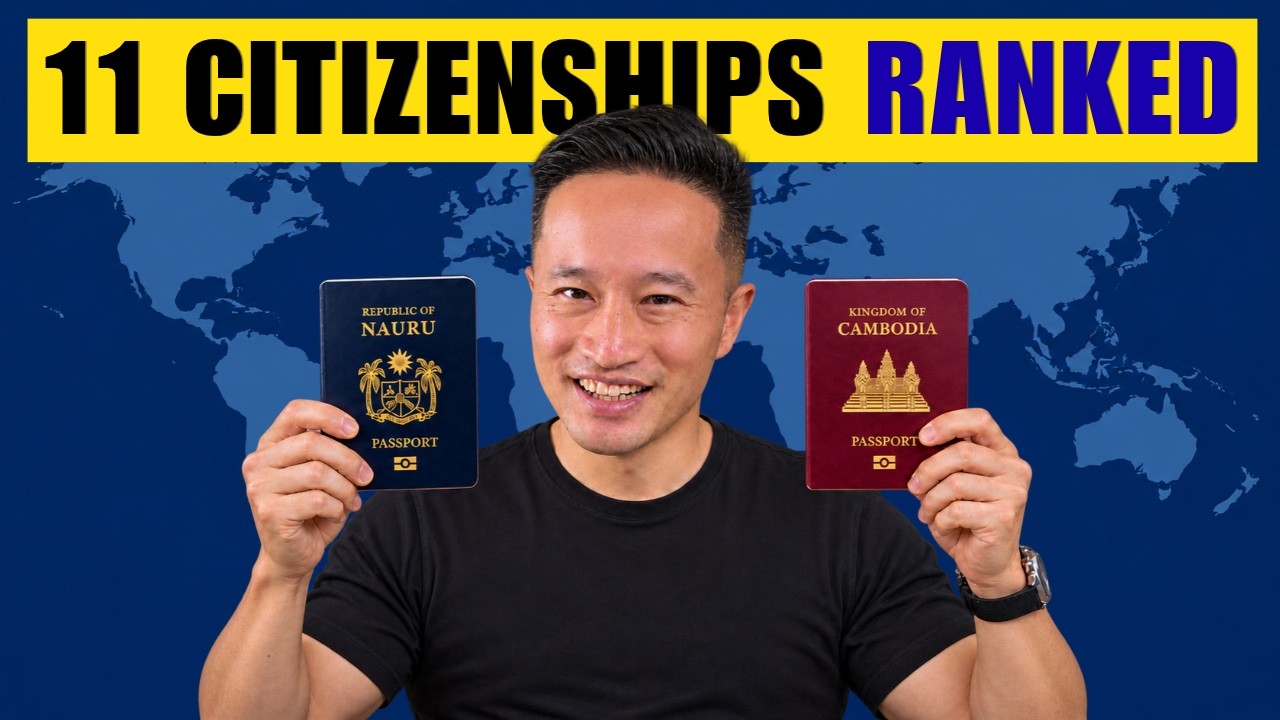
1. Nauru
First is Nauru, now officially named Naoero, a tiny coral island northeast of Australia, small enough to look like a speck on a Pacific map. Its citizenship program is designed to support economic development and climate resilience.
The temporary contribution is US$90,000 (about C$126,000) for the main applicant, before fees. The program quotes three to four months for processing.
The discount applies to applications filed before 31 December 2026, not citizenship completed by year-end.
I wouldn’t choose it just because it’s cheap. The program only launched in 2024, and this is a donation you won’t get back.
2. São Tomé and Príncipe
São Tomé and Príncipe sits off Africa’s west coast, where old cocoa plantations reflect its history.
Citizenship requires a National Transformation Fund contribution: US$90,000 (about C$126,000) for one applicant, or US$95,000 (about C$133,000) for an eligible family of two to four, before fees.
The official program quotes around two months to a decision, then three to four months for the passport. That’s roughly five to six months overall.
The family price is the attraction. Just don’t confuse a two-month decision with having passports ready for everyone.
3. Vanuatu
Next is Vanuatu, a chain of volcanic islands in the South Pacific where active volcanoes are part of the landscape. Its citizenship route is built around a contribution.
Its contribution route starts at US$130,000 (about C$182,000) for one applicant, plus US$5,000 (about C$7,000) for due diligence. Provider VIMB advertises roughly two months from complete submission to passport delivery.
The catch: the EU ended Vanuatu’s visa exemption in December 2024.
That affects travel on a Vanuatu passport; you keep your Canadian passport’s travel privileges. So you’re paying for another citizenship, without adding visa-free EU access.
VIMB’s timeline is an estimate, rather than a government guarantee.
4. Dominica
Dominica’s Economic Diversification Fund route starts at US$200,000 (about C$280,000) for a single applicant, or US$250,000 (about C$350,000) for the applicant and up to three qualifying dependants.
Those are contributions, with processing, background-check, interview and other charges added.
Official guidance describes approximately three to six months for complete applications, but preparing your documents takes additional time and the passport is a separate step. However, IMI’s agent-reported Q4 2025 data put the approval average at 9.3 months.
If you like the outdoors, Dominica offers more than a beach holiday. Its Waitukubuli National Trail links rainforest, rivers, waterfalls and mountain scenery. It was developed as the Caribbean’s first long-distance walking trail, giving the island a very different feel from a resort strip.
One quick note about these Caribbean programs. The EU has asked five countries to phase out their citizenship-by-investment programs by June 1, 2028, so some of these options could close to new applicants.
5. Antigua and Barbuda
Antigua and Barbuda markets its beaches with a memorable promise: one for every day of the year.
Its National Development Fund contribution is US$230,000 (about C$322,000), with qualifying family members potentially included. Processing, due diligence and passport fees come on top.
IMI’s agent survey recorded average approvals of about fourteen months in late 2025.
Relevant Canadian applicants need an RCMP criminal-history check; a local police clearance isn’t sufficient.
Antigua also appeals as somewhere you might actually live, with English as the official language and an established tourism industry. I’d consider it for a Caribbean home, but the reported wait is the trade-off.
6. Grenada
Grenada is a Caribbean island country known for nutmeg.
Its National Transformation Fund contribution starts at US$235,000 (about C$329,000), before fees.
Agents often highlight eligibility for the American E-2 investor visa. But Canada already has that treaty relationship. You don’t need Grenadian citizenship just to meet the treaty nationality requirement.
IMI’s agent survey reported seven-month ave rage approvals in late 2025, rather than a delivery guarantee today.
There’s also an art gallery you visit with a mask and snorkel: the Molinere underwater sculpture park, with submerged figures inspired by local culture.
7. Saint Lucia
Saint Lucia’s National Economic Fund route requires a US$240,000 (about C$336,000) contribution for an applicant with up to three qualifying dependants, before fees.
Alternatively, qualifying government bonds require US$300,000 (about C$420,000) held for five years, plus a US$50,000 (about C$70,000) non-refundable administration charge and other costs.
The bonds pay no interest, so keeping capital doesn’t make the route free.
Be careful with timing: the program’s FAQ retains outdated prices alongside a ninety-day statement. IMI’s historical survey instead reported eighteen-month approval waits in late 2025.
The island’s volcanic character goes beyond those famous peaks. Near Soufrière, you can visit Sulphur Springs, with steaming vents and bubbling mud pools, then try the nearby mineral mud baths. It’s a more memorable introduction to the country than another picture of a beach.
8. St. Kitts and Nevis
St. Kitts and Nevis is a Caribbean country of two volcanic islands.
Citizenship lawyer Jennifer Harding-Marlin, based in St. Kitts, told CTV News in August 2025: “There’s a lot of Canadians and Americans that are looking to get another citizenship.”
Its Sustainable Island State Contribution starts at US$250,000 (about C$350,000) for one applicant or a qualifying family of up to four, before fees.
The government quotes 120 to 180 days to an application decision, which can mean approval in principle, rejection or a delay. Passport delivery comes later.
New applicants need biometric enrolment, with collection centres in Ottawa and Toronto.
9. Turkey
Türkiye bridges Europe and Asia, with Istanbul stretching across the Bosphorus.
Qualifying property starts at US$400,000 (about C$560,000), with a three-year resale restriction. A bank-deposit route requires US$500,000 (about C$700,000), also held for three years.
You retain an asset, but its value, exchange rates and transaction costs affect what you recover.
Provider Gordion Partners estimates eight to twelve months for the complete citizenship process, without an official deadline.
I’d consider this if you want property there anyway. A passport won’t turn an unsuitable property into a good purchase.
10. El Salvador
El Salvador is the expensive wildcard: its Freedom Passport program calls for a US$1 million (about C$1.4 million) contribution paid in Bitcoin or USDt.
That covers the main applicant, with a family route for a spouse and children under eighteen. Additional family administration charges apply.
Despite the crypto payment, you’re making a contribution, not buying an investment you can later cash out.
The government describes a fast-track route, but I wouldn’t promise a six-week passport based on the material available.
I’d put this near the bottom for value. Unless El Salvador is central to your plans, much cheaper options deserve your attention first.
11. Cambodia
Cambodia brings us to Southeast Asia, home to Angkor Wat and the ancient temples around Siem Reap. Its citizenship route is a much bigger commitment than some older passport lists suggest.
Under its December 2025 rules, qualifying personal investment starts at four billion riel, roughly US$1 million (about C$1.4 million). The donation route requires twelve billion riel, roughly US$3 million (about C$4.2 million).
The investment must meet approval requirements, and the Ministry of Interior evaluates citizenship applications. Spending the money doesn’t guarantee a passport.
I wouldn’t attach a delivery date without verifying the complete process.
US$3 million (about C$4.2 million) for the donation route? At that price, I’d expect the passport to come with a waterfront villa. For a Canadian who just wants a backup citizenship, I think that price is ridiculous. This one wouldn’t make my shortlist.
Canadian takeaway
For Canadians, I’d start with what you want a second citizenship to do. Is it somewhere you’d consider living? An option for your family? Then compare the rights you receive, the full cost, how much money stays invested and when you can expect the passport.
But don’t confuse a second passport with a Canadian tax exit. Your Canadian income-tax obligations depend on your residency status, not simply which citizenships you hold. Buying another passport alone doesn’t make you a non-resident.
The lowest contribution on this list is US$90,000 (about C$126,000), before fees. The most expensive mistake is thinking it changes what the CRA sees. If you have assets in Canada and a move in mind, cross-border exit planning can help you understand the tax and financial consequences. Start with a free discovery call using the link below.
What happens to your RRSP when you actually leave Canada is a separate but equally important part of cross-border financial planning. Understanding the tax implications and how your retirement savings will be treated abroad can help you make more informed decisions before your move.
For more practical guidance on Canadian retirement savings, taxes, and moving abroad, explore our financial planning services or join our free financial newsletter.
Build the life you want, with the right Blueprint.